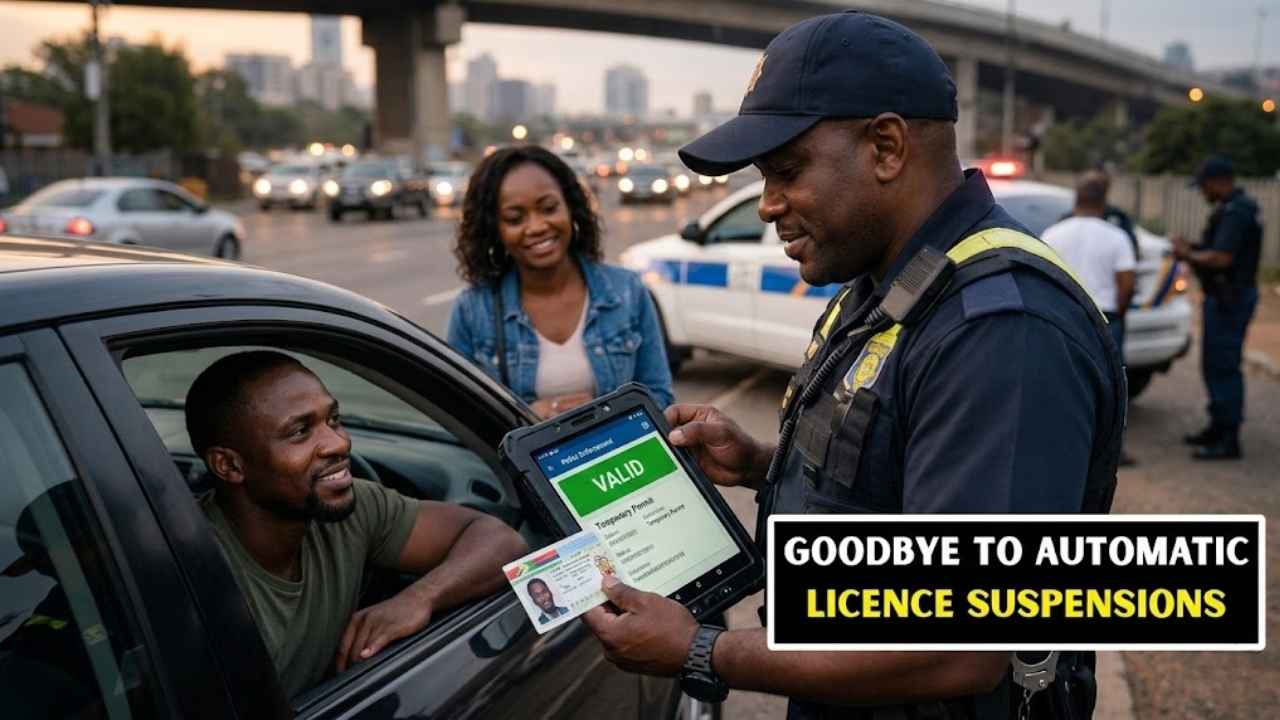
March 2026 Shock South Africa: From March 2026, South Africa will introduce automatic licence suspensions nationwide, ushering in a stricter phase of digital road enforcement. The reform signals the end of repeatedly ignored traffic fines and delayed penalties. Instead, authorities are activating a connected monitoring platform designed to respond instantly when motorists exceed legal limits. Officials believe this shift will reduce repeat violations, improve accountability, and strengthen road safety standards across all provinces.
Key Differences Between the Old and New Enforcement System
| Category | Previous Approach | New 2026 Enforcement Model |
|---|---|---|
| Fine Tracking | Manual and province-based | Centralised real-time digital database |
| Suspension Decision | Court-driven process | Automatic once demerit limit is reached |
| Notifications | Paper-based letters | Electronic suspension alerts |
| Processing Time | Weeks or months | Immediate activation |
| Monitoring Scope | Limited cross-province sharing | Nationwide integrated tracking |
How the Automatic Licence Suspension System Works
The new enforcement structure relies on a unified national infringement database that records unpaid fines and demerit points instantly. Traffic departments throughout the country are digitally linked, allowing authorities to track violations without administrative delays. Once a driver reaches the maximum demerit threshold, the system automatically issues a suspension notice electronically.
Because updates occur in real time, repeat offenders can no longer rely on backlogs or paperwork delays to continue driving unchecked. The automated system removes manual intervention, ensuring that enforcement measures are consistent and immediate.

Traffic Law Changes Taking Effect in March 2026
Beginning in March 2026, stricter compliance standards will apply in every province. Motorists accumulating multiple offences within a short period may face temporary driving bans without receiving repeated warning notices. Automated penalty triggers will activate once demerit limits are exceeded.
Authorities state that the purpose of these changes is to promote responsible driving habits and reduce dangerous conduct on highways and urban roads. Drivers are encouraged to monitor their infringement records regularly and settle outstanding fines promptly to avoid unexpected suspensions.
Impact of Automatic Driving Licence Suspensions on Motorists
The nationwide rollout is expected to significantly influence driver behaviour. With immediate consequences tied to repeated violations, motorists may reconsider risky actions such as speeding or ignoring traffic signals. Businesses operating fleet vehicles will also need stricter internal monitoring systems to prevent operational disruptions caused by suspended employees.

Legal professionals highlight the importance of understanding appeal procedures. While some observers raise concerns about possible administrative errors, officials maintain that the integrated database reduces the likelihood of inaccuracies through consistent digital tracking.
What Automatic Licence Suspensions Mean for Road Safety in South Africa
The introduction of automatic licence suspensions represents a broader commitment to zero-tolerance enforcement. Policymakers anticipate a measurable decline in repeat offences and traffic-related incidents as enforcement becomes faster and more transparent.
The long-term success of the system will depend on accurate data management, public awareness, and ongoing oversight. For drivers, the message remains straightforward: compliance with traffic laws and timely payment of fines are essential to maintaining driving privileges and avoiding disruption to work or daily life.

Final Verdict
Automatic licence suspensions in South Africa mark a decisive move toward digital enforcement and stricter accountability. While the system promises improved road safety and faster action against repeat offenders, drivers must remain vigilant about monitoring fines and demerit points to prevent sudden suspensions once the March 2026 rollout begins.
Disclaimer
This article is intended for informational purposes only. Regulations regarding automatic licence suspensions in South Africa may be updated or amended by official authorities. Readers should consult verified government sources for the most current legal requirements and enforcement details.
